
 English
  Arabic
  Dutch
Dutch  French
  German
  Italian
  Portuguese
  Russian
  Spanish
 What makes one screw surface treatment more suitable than another?
The answer depends on the screw material, working environment, required service life, and production cost. A finish that works well for an indoor machine may not provide enough protection for outdoor or marine equipment.
Surface treatment can improve corrosion resistance, wear resistance, appearance, and durability, but different processes offer different levels of protection and cost. For OEM buyers, choosing the right treatment means finding the best balance between performance and production requirements.
This guide compares 6 commonly used screw surface treatment options and explains what buyers should consider before ordering.
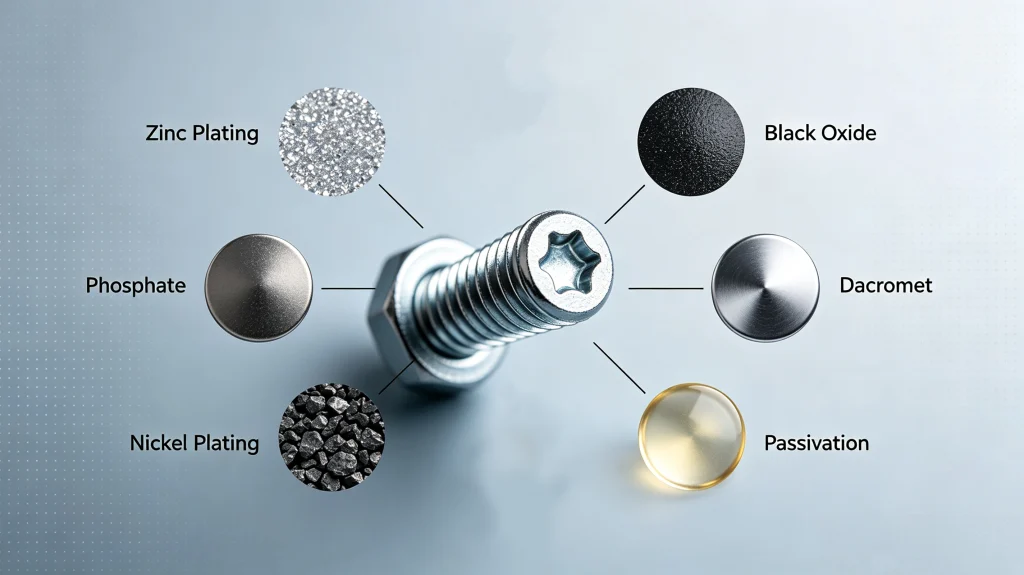
Screw Surface Treatment Comparison
| Surface Treatment | Corrosion Resistance | Cost | Appearance | Main Advantage |
| Zinc Plating | Good | Low | Silver/White | Economical protection |
| Black Oxide | Fair | Low | Black | Minimal dimensional change |
| Dacromet | Excellent | Medium–High | Silver-Gray | Strong corrosion protection |
| Nickel Plating | Good | Medium | Bright Silver | Appearance and wear resistance |
| Phosphate | Fair | Low | Gray/Black | Lubricity and paint adhesion |
| Passivation | Excellent* | Medium | Natural Stainless | Improves stainless steel protection |
Performance depends on the stainless steel grade and operating environment.
Common Screw Surface Treatment Methods
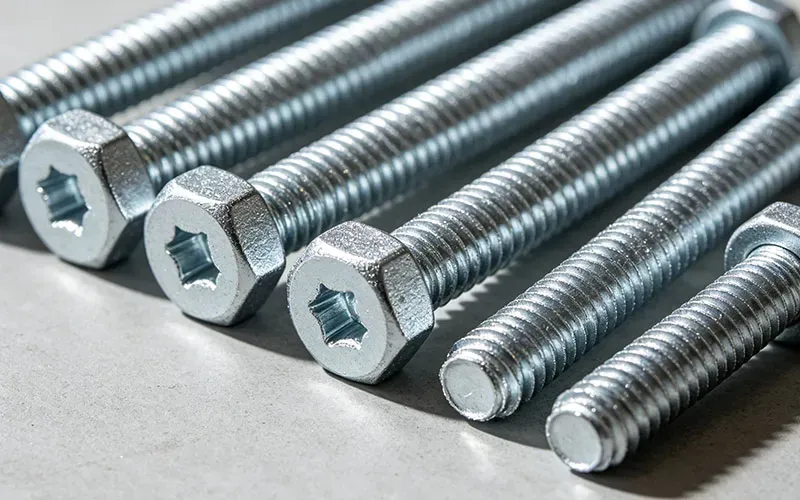
Zinc Plating
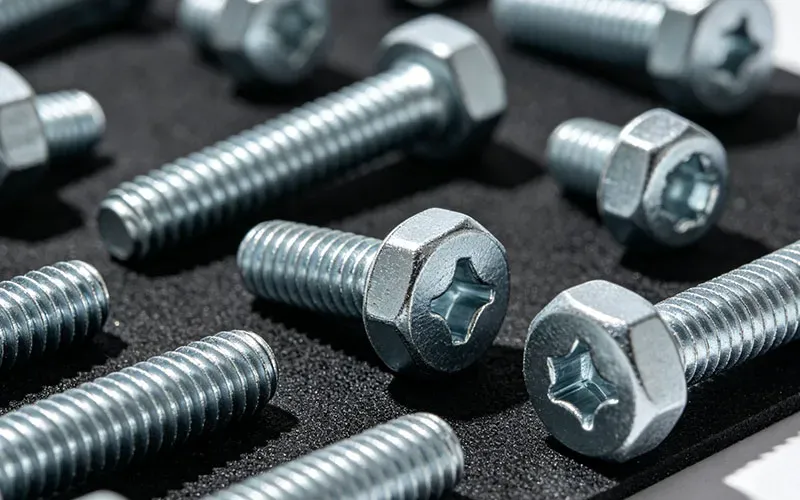
Zinc plating is widely used for carbon steel screws because it provides basic corrosion protection at a relatively low cost. The zinc layer acts as a barrier and provides sacrificial protection when the surface is damaged.
It is commonly used for machinery, industrial equipment, furniture hardware, and general-purpose fasteners. For large OEM orders, it is often a practical choice when moderate corrosion resistance is sufficient.
Black Oxide
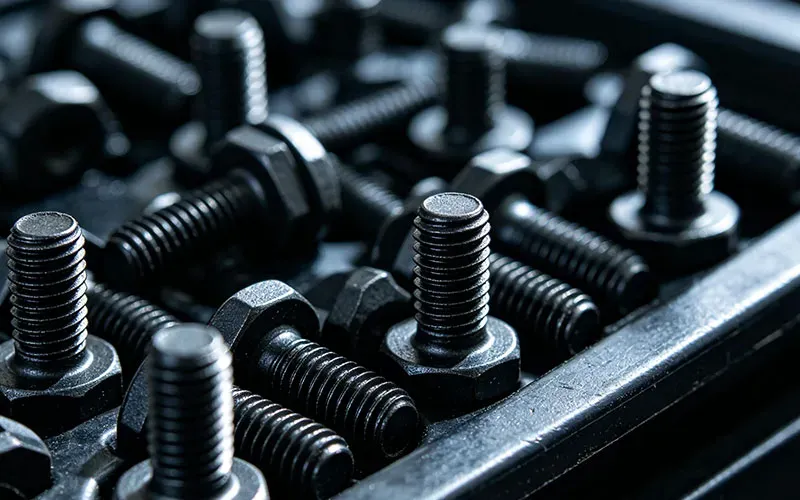
Black oxide forms a thin oxide layer that gives steel screws a black appearance. Since the treatment has little effect on dimensions, it is useful for precision screws and mechanical components where maintaining thread and dimensional accuracy is important.
Its corrosion resistance is limited, however, so oil or another protective treatment may be required for humid environments.
Dacromet Coating
Dacromet is a zinc-aluminum flake coating designed for higher corrosion resistance. It is commonly used in automotive components, outdoor equipment, and applications exposed to moisture or salt.
For high-strength fasteners, buyers should also consider hydrogen embrittlement risks associated with certain electroplating processes. This makes the coating process an important part of fastener specification, not simply a cosmetic choice.
Nickel Plating
Nickel plating creates a smooth, bright surface while improving corrosion resistance and surface hardness. It is often selected for electronic equipment, precision components, and visible hardware.
For OEM products, nickel plating can provide both functional protection and a consistent appearance where surface quality is part of the specification.
Phosphate Coating
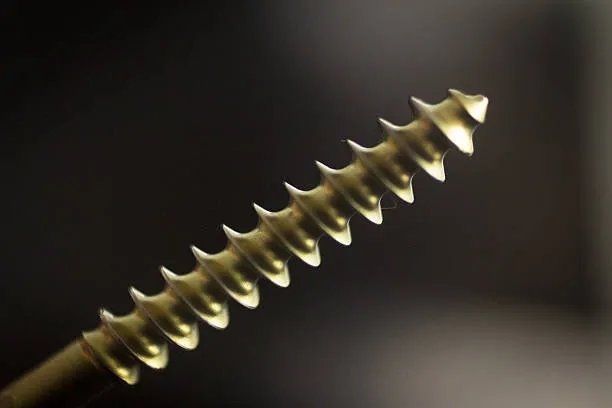
Phosphate coating is mainly used when lubrication, friction control, or paint adhesion is important. Its porous surface can retain lubricants and provide a suitable base for additional coatings.
It is commonly used for mechanical components but generally does not provide enough corrosion protection on its own for severe outdoor or marine applications.
Passivation
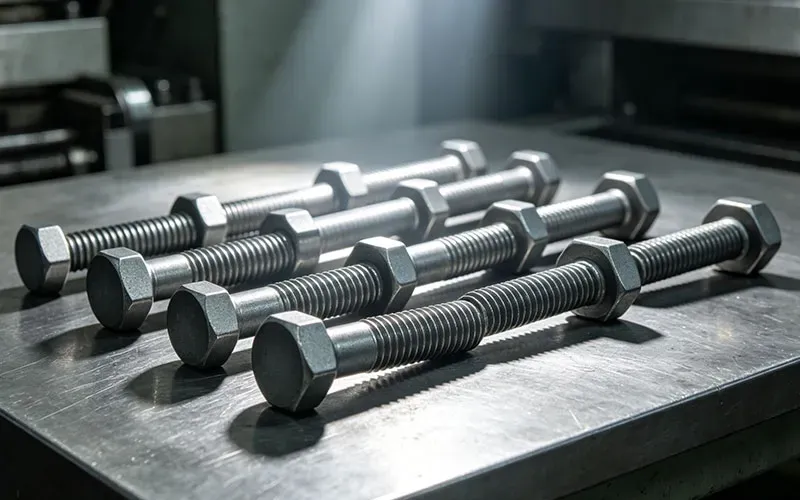
Passivation is primarily used for stainless steel screws. Rather than adding a conventional coating, the process removes surface contaminants and helps restore the protective passive layer of stainless steel.
It is commonly considered for food-processing equipment, medical equipment, marine applications, and other environments where corrosion resistance and surface cleanliness are important.
How Should OEM Buyers Choose a Screw Surface Treatment?
Consider the Working Environment
The first consideration should be where the screw will be used.
| Environment | Possible Treatment |
| Indoor equipment | Zinc plating, Black Oxide |
| Outdoor applications | Dacromet, suitable zinc systems |
| Marine environments | Suitable stainless steel + passivation |
| Chemical exposure | Material and coating selected for the specific chemical |
For severe environments, changing the base material may be more effective than simply choosing a thicker coating.
Match the Treatment to the Application
Surface treatment also affects mechanical and assembly performance. High-strength fasteners require attention to hydrogen embrittlement, while frequently assembled screws may need better wear and friction characteristics.
Precision screws require another consideration: coating thickness. An excessive or uneven coating can affect thread fit, torque, and automated assembly. These requirements should therefore be confirmed before production rather than after the screws are manufactured.
Balance Performance and Cost
Cost becomes especially important for high-volume OEM orders. Zinc plating and black oxide are generally economical options, while Dacromet and specialty finishes require greater processing investment.
The most expensive treatment is not necessarily the best choice. The objective is to select the simplest process that can reliably meet the required service conditions.
An Overlooked Factor: Coating Thickness and Dimensional Tolerance
For standard screws, surface treatment may have little noticeable impact on assembly.
For precision and customized fasteners, however, coating thickness can become an important engineering consideration.
A thick or uneven coating may affect:
- Thread fit
- Overall dimensions
- Torque and friction
- Automated installation
This is why OEM buyers should confirm coating specifications during the drawing and production stage, particularly for small-diameter screws or components with tight tolerances.
Surface Treatment and Base Material Should Be Selected Together
A common mistake is choosing the surface treatment independently from the screw material.
For example, zinc-plated carbon steel and passivated stainless steel both provide corrosion protection, but they rely on different protection mechanisms and are suitable for different conditions.
A more practical selection method is to evaluate:
Base Material + Surface Treatment + Working Environment + Service Life
This approach helps OEM buyers avoid both under-specification and unnecessary processing costs.
Need Help Choosing the Right Finish?
For customized screws, selecting a suitable surface treatment requires more than comparing coating prices. The finish needs to match the material, dimensions, application environment, and performance requirements.
With more than 20 years of experience in custom screw manufacturing, Hongyuan Fastener works with different fastener materials, specifications, and surface treatment requirements for OEM projects.
If you are unsure whether zinc plating, black oxide, Dacromet, nickel plating, phosphate, or passivation is right for your application, contact Hongyuan with your drawing, material specification, and working conditions. Our team can help evaluate a practical finish based on performance, appearance, dimensional requirements, and production cost.






