
 English
  Arabic
  Dutch
Dutch  French
  German
  Italian
  Portuguese
  Russian
  Spanish
 When choosing fastening solutions, many manufacturers face a common challenge: how to create a reliable connection when only one side of the assembly is accessible?
Blind Rivets provide an efficient solution by allowing one-side installation while creating a permanent and secure connection. They are widely used in sheet metal, automotive, electronics, and industrial applications.
However, selecting the right blind rivet requires more than matching the size. Factors such as rivet type, material, grip range, and strength requirements all affect fastening performance.
This guide explains how blind rivets work, their common types, and how to choose the right blind rivet manufacturer for your application.
What Are Blind Rivets?
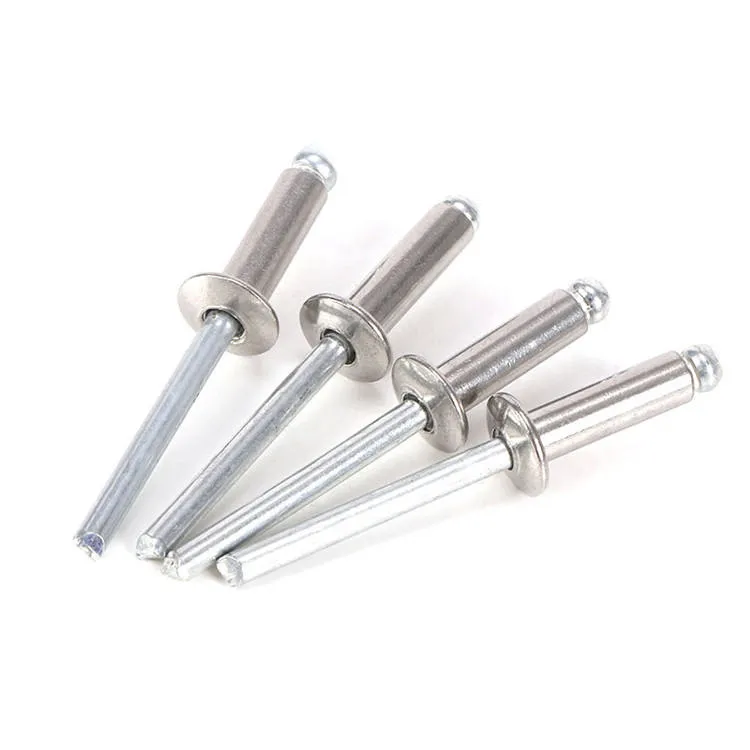
A blind Rivet is a mechanical fastener designed to join two or more components when access is available from only one side of the assembly. This makes them particularly suitable for enclosed structures, sheet metal assemblies, and areas where the rear side cannot be reached.
A standard blind rivet consists of two main components:
- Rivet Body – The tubular part inserted into the prepared hole
- Mandrel – The internal pin pulled during installation
How Do Blind Rivets Work?
The working principle of blind rivets is based on controlled deformation.
The basic installation process includes:
- The blind rivet is inserted into a pre-drilled hole.
- A rivet tool pulls the mandrel upward.
- The rivet body expands behind the material.
- The expanded section creates a mechanical lock.
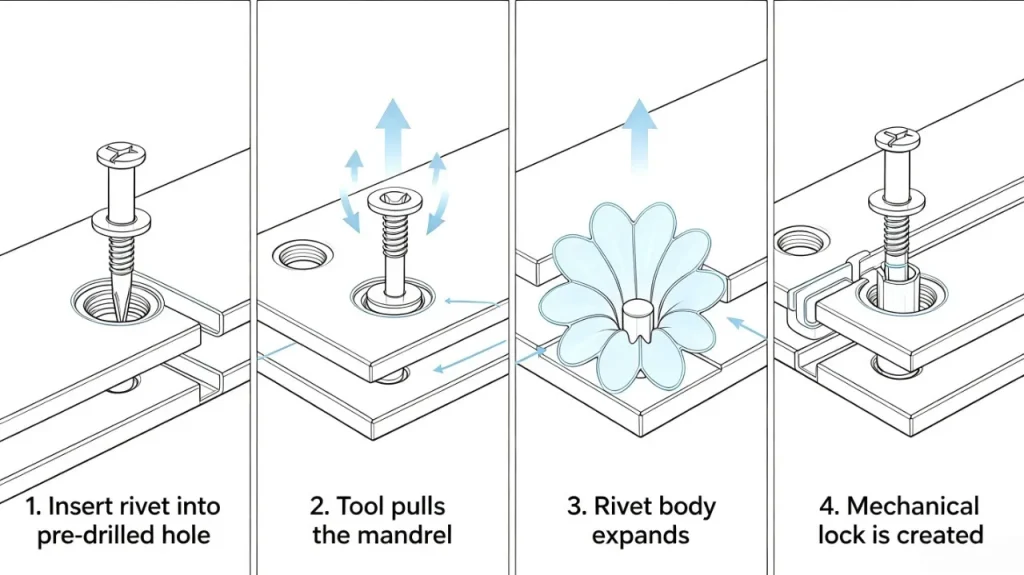
After installation, the rivet provides a secure connection without requiring access to the opposite side of the assembly.
This feature makes blind rivets especially valuable for applications such as:
- Closed structures
- Thin sheet metal components
- Equipment housings
- High-volume manufacturing processes
Compared with traditional fastening methods, blind rivets can improve assembly efficiency and reduce installation time.
Types of Blind Rivets
Different applications require different blind rivet designs. Choosing the correct type depends on connection requirements, material thickness, and environmental conditions.
| Type | Features | Common Applications |
| Open-End Blind Rivets | General-purpose design, economical, widely used | Sheet metal fabrication, general assembly |
| Closed-End Blind Rivets | Better sealing performance, reduces moisture entry | Electronics, outdoor equipment |
| Multi-Grip Blind Rivets | Wider grip range, suitable for different material thicknesses | Mixed thickness assemblies |
| Structural Blind Rivets | High tensile and shear strength, improved load capacity | Heavy equipment, automotive, industrial structures |
| Large Flange Blind Rivets | Larger bearing area, protects softer materials | Thin sheets, plastic components |
Among these types, open-end blind rivets are the most common choice for standard applications because they offer a good balance between performance and cost.
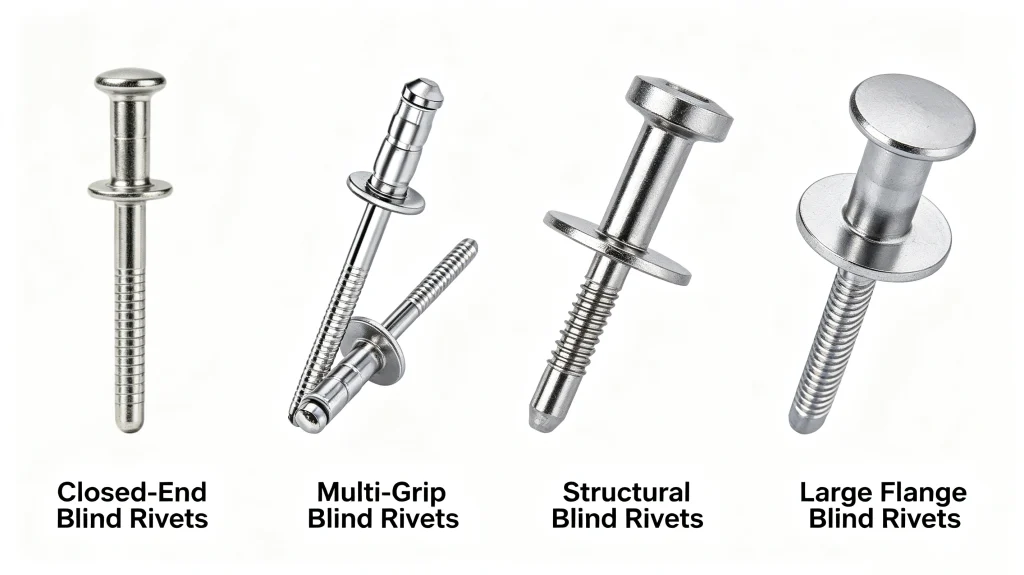
For applications requiring stronger connections, such as heavy equipment or structural components, structural blind rivets are often selected due to their higher mechanical strength.
Common Blind Rivet Materials
| Material | Characteristics | Applications |
| Aluminum Blind Rivets | Lightweight, corrosion resistant, easy installation | Electronics, lightweight structures |
| Carbon Steel Blind Rivets | High strength, cost-effective | General industrial applications |
| Stainless Steel Blind Rivets | Excellent corrosion resistance and durability | Outdoor, marine, harsh environments |
| Copper Blind Rivets | Good electrical conductivity | Electrical applications |
For example, aluminum blind rivets are commonly used when weight reduction is important, while stainless steel blind rivets are preferred for applications exposed to moisture or corrosive conditions.
Material compatibility should also be considered. Using unsuitable combinations of metals may increase the risk of corrosion and reduce connection reliability.
Blind Rivets vs. Pop Rivets: Are They the Same?
Many buyers search for pop rivets when looking for blind rivets. In most cases, these two terms refer to the same type of fastening product.
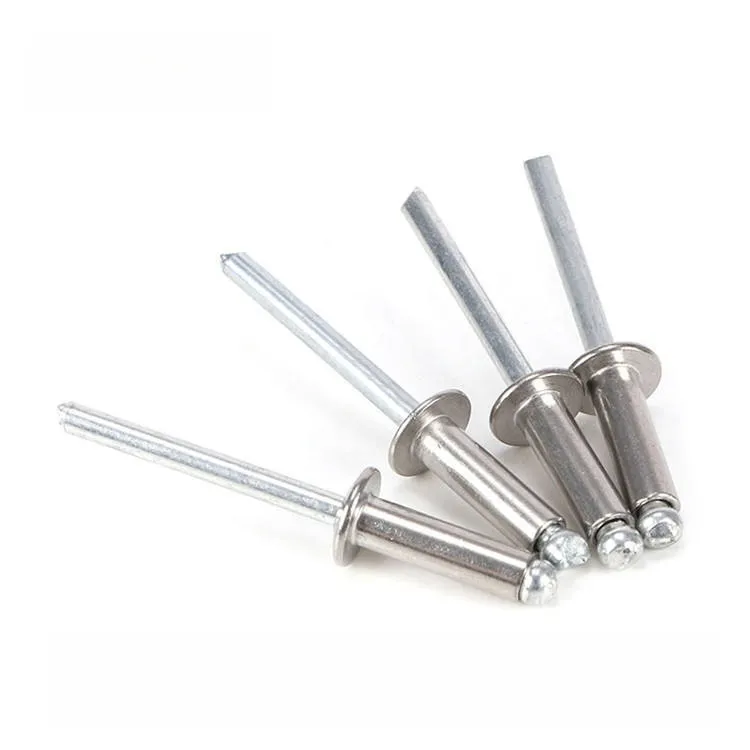
“Pop rivet” was originally a popular brand-related term, while “blind rivet” is the industry term used by manufacturers and engineers.
Both describe a rivet that can be installed from one side using a tool that pulls the mandrel and expands the rivet body.
For industrial purchasing, the term blind rivet is generally preferred because it covers a wider range of designs, including structural blind rivets, closed-end blind rivets, and multi-grip blind rivets.
How to Choose the Right Blind Rivets?
Selecting the right blind rivet requires evaluating more than just size. Buyers should consider several important factors before placing an order.
Grip Range and Size
The grip range determines the total thickness of materials that the rivet can securely join.
Before selection, buyers should confirm:
- Material thickness
- Hole diameter
- Required rivet length
Choosing an incorrect grip range may cause insufficient expansion, weak fastening performance, or installation problems.
Material Selection
The working environment plays an important role in material selection.
For example:
- Indoor applications may use aluminum or carbon steel blind rivets.
- Outdoor environments often require stainless steel blind rivets for better corrosion resistance.
- High-load applications may require stronger steel-based solutions.
The correct material helps improve durability and reduce maintenance requirements.
Strength Requirements
Different applications have different load requirements. Important factors include tensile strength and shear strength.
Standard blind rivets are suitable for general assembly, while structural blind rivets are better for applications involving:
- Heavy loads
- Continuous vibration
- Higher safety requirements
Application Environment
Environmental conditions can influence fastener performance.
Buyers should consider factors such as:
- Moisture exposure
- Temperature changes
- Chemical contact
- Outdoor installation
Selecting the correct rivet design and material ensures better long-term reliability.
How to Choose a Reliable Blind Rivet Manufacturer?
For OEM buyers and distributors, choosing the right blind rivet manufacturer means looking beyond product price. Production capability, quality control, and customization support are key factors for long-term cooperation.
At Hongyuan Fastener, strict quality management runs through the entire manufacturing process, including material inspection, dimensional checks, and final product testing. The company also supports OEM requirements such as custom sizes, special materials, and drawing-based production.
With reliable manufacturing capability and engineering experience, Hongyuan Fastener provides consistent blind rivet solutions for global customers.
Choosing the Right Blind Rivet Solution
Blind Rivets provide a practical fastening solution for applications where only one side of the assembly is accessible. Their flexibility in design, material, and strength options makes them suitable for various industrial applications.
Choosing the right blind rivet depends on factors such as rivet type, grip range, material, and working environment. With reliable manufacturing capability and quality control, Hongyuan Fastener helps customers achieve stable and consistent fastening performance.






