
 English
  Arabic
  Dutch
Dutch  French
  German
  Italian
  Portuguese
  Russian
  Spanish
 In modern manufacturing and assembly industries, fasteners play a critical role in ensuring structural stability and product reliability. Among them, Self-Tapping Screws and Thread Cutting Screws are two commonly used types that are often selected for similar applications, yet frequently misunderstood or misused during procurement.
This leads to an important question:
“What is the difference between Self-Tapping Screws and Thread Cutting Screws, and how can buyers choose the right one for their specific application?“
This article will provide a clear comparison to help you better understand their characteristics and make more informed purchasing decisions.
What Are Self-Tapping Screws?
Self-tapping screws are fasteners designed to create internal threads in a pre-drilled hole during installation. They are commonly used in materials such as thin metal sheets, plastics, wood, and other light industrial components where traditional tapping is not required.
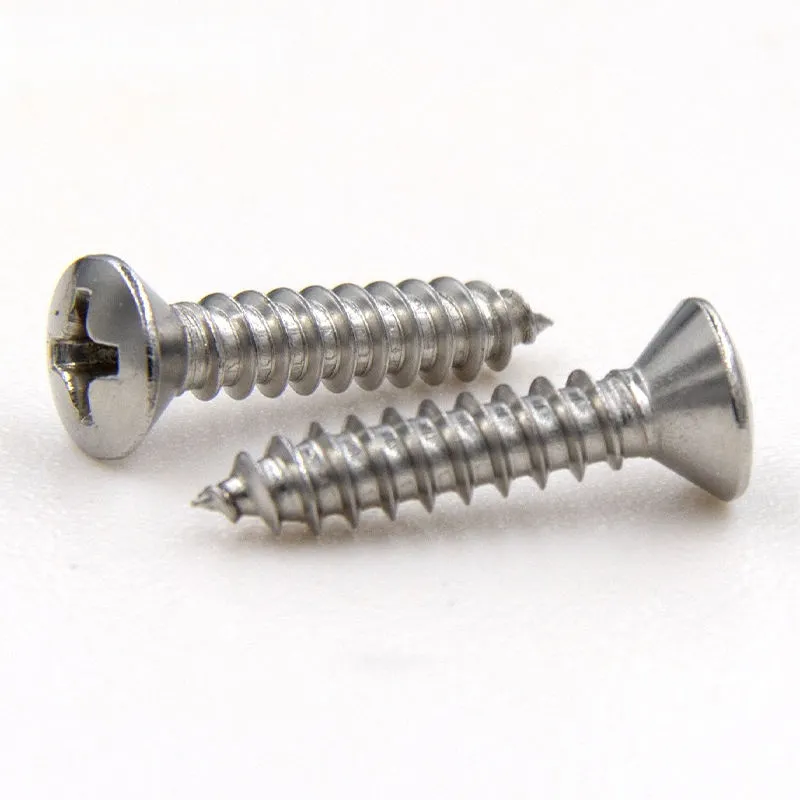
Working Principle of Self-Tapping Screws
Self-tapping screws form threads by displacing and compressing the material rather than cutting it away. As the screw is driven in, the material is reshaped to match the thread profile, creating a secure fastening. This screw is suitable for softer materials where full thread cutting is not necessary.
Common Types of Self-Tapping Screws
- Thread Forming Screws
- Sheet Metal Screws
- Plastic Screws
- Drywall Screws
Advantages and Limitations of Self-Tapping Screws
Advantages
- No need for pre-tapped internal threads
- Faster installation and higher assembly efficiency
- Suitable for thin or soft materials
- Cost-effective for mass production
Limitations
- Not ideal for very hard materials
- Thread strength depends on base material
- Risk of material cracking in brittle plastics
- Limited load-bearing capacity compared to machine screws
What Are Thread Cutting Screws?
Thread cutting screws are fasteners designed to cut their own mating threads into pre-drilled holes during installation. Unlike self-tapping screws that mainly displace material, thread cutting screws remove material to form a precise thread path.
They are commonly used in harder materials where stronger thread engagement is required.
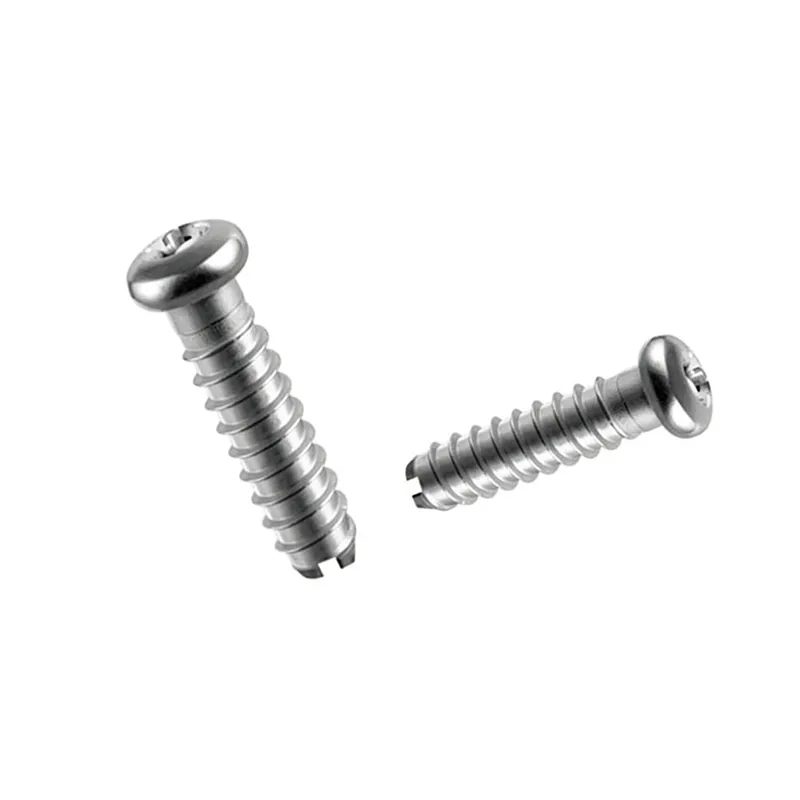
Working Principle of Thread Cutting Screws
Thread cutting screws work by removing material from the internal wall of the hole as they are driven in. Their cutting edges or notches act like miniature taps, creating threads in a controlled cutting process.
This process is similar to a simplified tapping operation, allowing better thread definition and reducing excessive material stress during installation.
Common Types of Thread Cutting Screws
- Type F
- Type 23
- Type BT
- Trilobular Cutting Screws
Advantages and Limitations of Thread Cutting Screws
Advantages
- Provides stronger and more precise thread engagement
- Suitable for harder materials compared to self-tapping screws
- Reduces risk of material deformation during installation
- Improves holding strength in demanding applications
Limitations
- Requires higher installation torque
- Not suitable for very soft or brittle materials
- May generate debris during cutting process
- Higher tool wear compared to self-tapping screws
Key Differences Between Self-Tapping Screws and Thread Cutting Screws
| Comparison Item | Self-Tapping Screws | Thread Cutting Screws |
| Working Method | Form threads by displacement (material deformation) | Form threads by cutting material |
| Material Removal | No cutting | Cuts and removes material |
| Material Suitability | Softer materials | Harder materials |
| Installation Torque | Lower | Higher |
| Thread Precision | Medium | Higher |
| Reusability | Average | Better |
| Metal Application | Thin sheet metal | Thicker metal |
| Risk of Cracking | Higher in brittle materials | Lower due to controlled cutting |
| Cost | Lower | Slightly higher |
Why Are Stainless Steel Thread Cutting Screws Becoming More Popular?
Growing Demand for Stainless Steel Fasteners
The demand for stainless steel fasteners continues to rise across construction, automotive, and renewable energy industries due to their durability and corrosion resistance.
304 vs 316 Stainless Steel Performance Difference
| Comparison Item | 304 Stainless Steel | 316 Stainless Steel |
| Chemical Composition | Chromium-Nickel alloy | Chromium-Nickel + Molybdenum |
| Corrosion Resistance | Good (general environments) | Excellent (marine & chemical environments) |
| Chloride Resistance | Limited | Strong resistance |
| Cost | Lower | Higher |
| Typical Applications | Indoor / general outdoor use | Marine, coastal, chemical, solar |
Excellent Corrosion Resistance in Harsh Environments
Stainless steel thread cutting screws perform well in marine, coastal, and chemical conditions where moisture and chlorides are constantly present.
Wide Use in Outdoor and Marine Applications
They are widely used in solar systems, outdoor structures, and marine equipment where long-term exposure requires stable fastening performance.

Lower Maintenance Cost with Longer Service Life
Their extended lifespan reduces maintenance frequency and replacement costs, making them a cost-efficient solution for long-term industrial use.
How Industrial Buyers Choose the Right Screws
Based on Material Selection
- Stainless steel is preferred for corrosion resistance
- Carbon steel is used for cost-sensitive applications with lower environmental exposure
Based on Application Environment
- Indoor / dry environments: standard carbon steel or zinc-plated screws
- Outdoor environments: stainless steel screws recommended
- Marine / chemical environments: higher-grade materials such as 316 stainless steel
Based on Installation Method
- Self-tapping screws for quick assembly in thin materials
- Machine screws for precision assembly with pre-threaded holes
- Thread cutting screws for harder materials requiring stronger engagement
Based on Corrosion Resistance Requirements
The higher the exposure to moisture, salt, or chemicals, the stronger the corrosion resistance needed.
Coastal or solar projects often require 316 stainless steel screws to ensure long-term stability and reduced maintenance costs.
Why OEM Manufacturers Prefer Custom Thread Cutting Screws
OEM manufacturers increasingly choose custom thread cutting screws to meet specific engineering and production requirements.
Key reasons include:
- Growing demand for non-standard customization in different industries
- Requirement for special head types to match unique assembly structures
- Need for advanced coatings to improve corrosion resistance and performance
- Strict dimensional tolerance requirements for precision engineering
- Compatibility with automated assembly systems for higher efficiency
Hongyuan Fastener provides full OEM/ODM support for thread cutting screws, covering customized head styles, coatings, precision machining, and automation-compatible designs, ensuring stable quality and reliable performance for global industrial applications.

Conclusion
The demand for custom thread cutting screws is increasing in OEM manufacturing due to the need for higher precision, better performance, and improved compatibility with modern production systems.
As applications become more complex, buyers often require non-standard solutions such as special head designs, advanced coatings, tighter tolerances, and automation-ready structures.
With strong OEM/ODM capabilities, Hongyuan Fastener provides customized designs, stable quality control, and consistent performance for global industrial applications.
Looking for a reliable supplier? Contact Hongyuan Fastener today for a quotation or customized fastening solution.
You can also contact us directly via WeChat:






